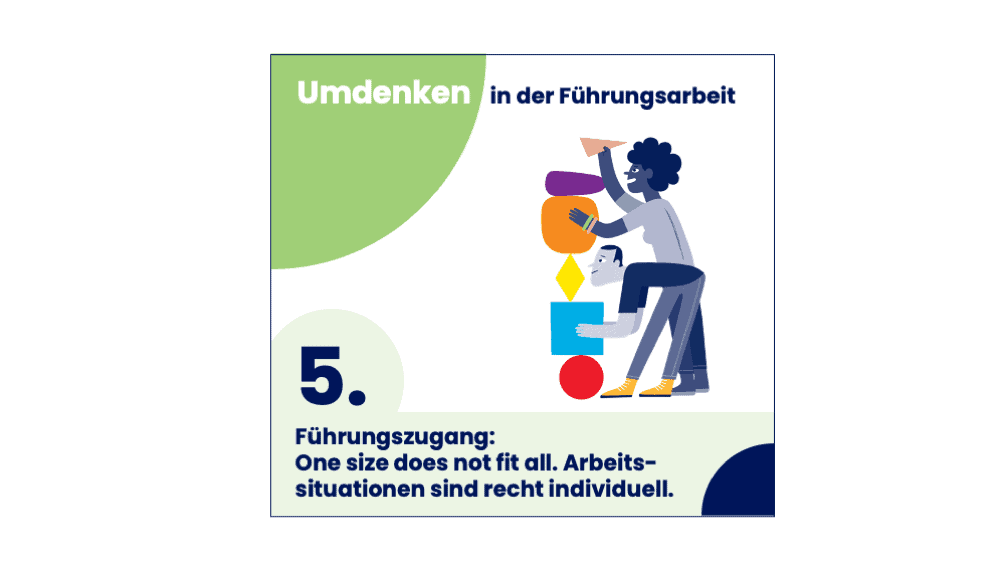
One size does not fit all. Work situations vary greatly from person to person.
In their quest for efficiency, many organizations try to standardize their processes and procedures. While this can be helpful in some areas, it can be extremely detrimental and demotivating when it comes to designing work environments. The COVID-19 pandemic has accelerated the shift toward decentralized and hybrid work environments and has highlighted how important a person’s physical work environment is to their well-being and productivity.
If you were to ask executives at your company, how do you think they would answer the following questions?
Have you ever …
- Have you noticed that some people enjoy meetings, while others tend to withdraw?
- Have you noticed a lack of engagement in online meetings?
- Have you noticed that some people are naturally drawn to certain work situations or environments?
- Have you noticed that people tend to personalize their workspace when they have the chance?
- Have you ever wondered why some people love being in a group setting with lots of interaction with others, while others prefer to work alone without distractions?
Whether they collaborate with others remotely or in person, whether they travel for work, or whether they choose a combination of all three options, effective leaders find ways to enable employees to tailor their work environment to maximize their well-being and productivity while helping others do the same.
How much choice and control do your employees have over their work environment? Do your managers create environments that help different types of people perform at their best?
A slightly different approach to communication on the part of leaders can make a decisive difference here. This is the fifth of eight leadership mindsets that can significantly improve a leader’s effectiveness.

A New Approach to Leadership: Leadership Approach #5: One size does not fit all.
Kay Sargent is a pioneer in the field of “human-centered” design. Together with her colleagues at HOK (www.hok.com), she is learning just how strongly the built environment affects people’s well-being and performance.
Kay recommends that companies review their HR policies and processes to enable personalized adjustments for a tailored work environment. But why? Because, on average, 80% of a company’s revenue is generated by its employees. She argues: “If we do anything in the built environment that negatively impacts people’s ability to perform at a high level, then we’re costing the company a lot of money.”
Preferred Social Environments and Personality
Human personality is a form of neurodiversity, as it has a significant impact on how a person perceives the world around them, how they process that information, and how they respond to it. The Process Communication Model®, a behavioral model of communication, provides a helpful framework for identifying and adapting social environments to accommodate different personality structures.
The PCM Assessment Matrix
Some people are intrinsically motivated to set goals and achieve them. They look within themselves for guidance on what is important and what to do next. Responsibility is their strength.
Some people are motivated by external factors to set goals for themselves. They are spurred into action by reacting to the world around them. Responsiveness is their strength.
Some people are more open to others and prefer a social environment where they can interact with people. They excel at building relationships (“Involving”).
Some people tend to be more reserved and prefer less interaction with others. They shine through their imagination (“Withdrawing”).
If you now look at the intersection of goals and people, there are four different quadrants, each representing one of the so-called preferred social environments.

Trusted Groups (“Group”)
People who are intrinsically motivated and committed prefer group settings. They draw their energy from social interactions and are motivated to build and maintain relationships. They want to work in a safe, supportive environment that offers them plenty of opportunities to interact with people they like.
One-to-one
People who are internally motivated and tend to be reserved prefer a personal environment. They draw their energy from focused interactions centered on ideas, values, and concepts. They work best in an environment with few distractions and more time and space to concentrate and develop ideas.
Group-to-Group
People who are externally motivated and committed also enjoy being around others, though for a different reason. They thrive on the energy around them and are therefore naturally drawn to places where there’s fun and excitement. They work best in environments that are dynamic, creative, stimulating, exciting, and full of humor.
Alone (“Alone”)
People who are externally motivated and tend to withdraw prefer to be alone. They need time and space to think, and solitude stimulates them. They want guidance in the form of tasks and concepts to work on, but prefer to do the work themselves.
The “One Size Fits All” Trap
To harness the power of social environments from the PCM and avoid the “one-size-fits-all” trap, you should consider these three questions:
- Canyour employees choose where and how they want to work?
- Areyour employees allowedto choose where and how they want to work?
- Doyour employees wantto choose where and how they work?

The more opportunities and autonomy you give your employees, the more likely they are to seek out a work environment that best meets their expectations. This is particularly important in these times, as companies want to motivate their employees to return to the workplace after COVID-19 while also striving to offer an attractive workplace for top talent and retain these employees in the long term.
Take different social environments into account to attract and retain top talent
Imagine the possibilities if you offered your employees the option to choose different social settings. How might you conduct your online meetings differently? How might conversations about returning to the workplace unfold? How could you incorporate more choices for your employees when designing physical workspaces?
Recommended Reading: Here you'll find a great article on creating a neurodiverse workplace (in English).
Change your mindset to unleash even more leadership potential
In one of the eight modules of our PCM Leadership Seminar Program, you will learn to recognize and adapt to the preferred social environments of different personality types.
In this module, managers will learn how to …
- Create a work environment that is specifically tailored to people's different personality types.
- can improve their employees' well-being and performance potential.
- can improve the effectiveness of meetings and other gatherings.
Get in touch with our PCM and leadership experts to learn more about how PCM can help your leaders effectively shape and further optimize the critical intersection between communication and personality.
Why can PCM leadership seminars make a difference for you?
Social competence is arguably the most important trait of a good leader: the ability to build relationships, engage with others, resolve conflicts, and motivate people are essential leadership qualities. Today’s leaders must cultivate their self-confidence and communication skills in order to succeed in an extremely diverse, global, and virtual environment.
The PCM Leadership Seminar Program is a collection of learning and practical modules that use the Process Communication Model® to address the most common and important questions in day-to-day leadership.
Managers will gain a better understanding of how their own personality influences their role and effectiveness as leaders. They will learn how to tailor communication and motivation strategies so that all personality types in the workplace are motivated to contribute. They will also learn how to strategically leverage personality diversity to the fullest extent possible.
Middle managers and those new to their roles will learn and apply key interpersonal and communication skills to enhance their effectiveness in addressing a variety of leadership challenges, such as communicating more effectively, managing performance and motivation, handling miscommunication and conflict, building trust and engagement, and practicing self-care.
Copyright Notice:
Originally written on March 29, 2023, by Nate Regier, next-element.com; translated and adapted by Uwe Reiner-Kolouch, KCG.