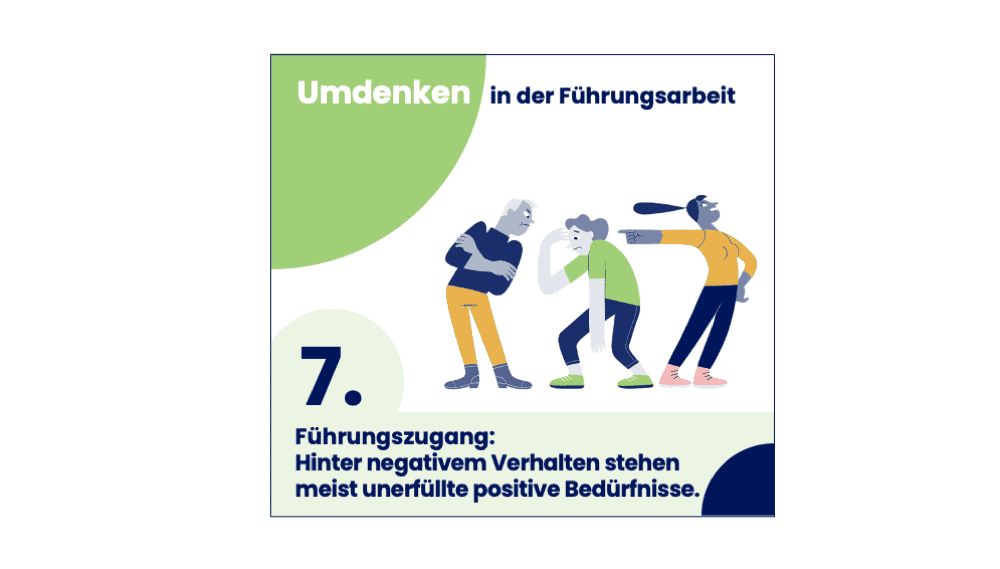
Negative behavior is usually driven by unmet positive needs
Are your managers able to recognize negative attention and intervene in a positive way, or do they get caught up in power struggles and miscommunication?
When children misbehave, we often attribute it to “seeking negative attention.” It’s remarkable how much energy and effort children expend to get attention. Often, this negative behavior only backfires on them and leads to punishment, power struggles, or other negative consequences. The same is true for adults, even though their negative attention-seeking behavior is often more subtle, habitual, and sometimes more costly.
The best parents, just like the best leaders, learn how to turn negative energy into positive motivation so that everyone wins.
If you were to ask executives at your company, what answers would you get to the following questions?
Have you ever …
- Have you ever wondered why adults sometimes act like spoiled children?
- Have you noticed how much energy is wasted on drama?
- Wouldn't it be nice if people focused more on their work instead of sabotaging each other?
- Have you noticed how misunderstandings can undermine trust and morale?
- Have you ever asked yourself why people keep hurting themselves?
- Have you ever engaged in self-destructive behavior, even though you knew it wasn't helpful?
How does negative attention manifest itself in your workplace? How much time do you spend putting out fires, fighting the same battles over and over again, and creating policies to manage the behavior of a few individuals? How do you attract negative attention?
Changing your approach to leadership when it comes to negative behavior can make a big difference. Here is the seventh of eight mindsets that can transform a leader’s effectiveness.

A New Approach to Leadership – Leadership Insights #7: Negative behavior usually stems from unmet needs.
By identifying and addressing unmet positive needs, leaders can significantly reduce costly power struggles and misunderstandings while simultaneously improving their employees’ engagement and motivation.
The Positive Side of Negative Attention
The Process Communication Model (PCM) reveals the secret: a strong, predictable, and observable relationship between negative and positive attention.
In the last post on Leadership Access #6, we described the six groups of psychological needs (motivators) that drive human behavior, each of which is linked to one of the six PCM personality phase types. People will always strive to satisfy their psychological needs. This is a survival instinct, just like breathing. And the most important thing to remember is this: If people’s needs are not met in a positive way, they will try to satisfy those very same needs in a negative way, whether consciously or unconsciously. This is distress and leads to predictable misunderstandings.
What does that mean? When we observe negative behavior, in most cases it is a symptom of the person desperately trying to satisfy their positive needs, but doing so in a negative way.

Here are the six predictable and observable behaviors—known as “failure mechanisms”—that occur when someone’s needs are not met in a positive way. Read the blog post on Leadership Approach #6 to learn how to meet needs in a positive rather than a negative way.
Excessive Control
Too much control means: micromanagement, overwork, criticism of others’ work and the way they use their time, as well as an obsessive focus on fairness, money, and details. Comments like “You’re wasting my time” or “What an idiot!” are not uncommon from these people when they don’t receive positive recognition for their productive work and time management.
Make ("silly") mistakes
Making mistakes means losing self-confidence, inadvertently making errors that invite criticism, and being overly self-critical. Comments like “I’m sure I messed this up” or “Why am I so stupid?” are often heard when they don’t receive positive recognition for who they are and how they feel.
Preaching Beliefs
Preaching one’s beliefs means becoming dogmatic, self-righteous, and judgmental—embarking, as it were, on a crusade, turning everything into an all-or-nothing issue, and becoming suspicious of people who do not share one’s own beliefs. Comments like “You’re clearly not committed” or “You’re either for me or against me” are often heard from people who don’t receive positive recognition for their principled work and convictions.
Blame
Blame-shifting includes making excuses, blaming others, shifting blame, avoiding all responsibility, and whining and complaining. Comments such as “It’s not my fault” or “She forced me to do it” are often heard from people who do not receive positive reinforcement.
Manipulation
Manipulation involves creating negative drama, pitting people against one another, manipulating them for self-serving purposes, or forcing people into situations where they can only lose. Comments such as, “John from accounting criticized your work in front of the team, but you didn’t hear that from me,” or “Only losers stay silent in meetings. You should tell John to mind his own business,” are often heard from people who don’t receive positive feedback.
Withdrawal
Withdrawal means isolating oneself, avoiding interactions, getting bogged down, starting projects but not finishing them, and pulling back. Comments like “It’s all too much” or “I don’t know what to do” are often heard from people who don’t experience being alone in a positive way.
When leaders understand the connection between positive and negative attention in terms of positive and negative fulfillment of needs, they gain a vast array of new opportunities to intervene in a way that improves the situation rather than allowing it to worsen further.

Wait a minute! Are you trying to tell me that …
I bet you have a few questions ready now, right?
- Are you saying that simply offering someone a positive alternative is enough to put an end to their negative behavior?
- But if I respond with positive reinforcement, won't that just reward the negative behavior?
- How can I take proactive steps so that I don't have to deal with this negative attention in the first place?
- Don't we still need to address that behavior?
- How does this affect the way we approach discipline and consistent performance?
These are the right questions to ask yourself. However, the answers might surprise you.
Change your mindset to unleash even more leadership potential
One of the modules in the PCM Executive Program focuses on understanding the connection between positive motivation and negative stress. In this module, executives learn how to …
- recognize their own distressing behaviors and be able to turn them into positive behaviors.
- Can help prevent power struggles over negative behavior.
- can help reduce costly miscommunication.
- can intervene in a positive way to prevent and reduce negative conflicts.
- can address disciplinary measures, incentive systems, and performance management more effectively.
Get in touch with our PCM and leadership experts to learn more about how PCM can help your leaders effectively shape and further optimize the critical intersection between communication and personality.
Why can PCM leadership seminars make a difference for you?
Social competence is arguably the most important trait of a good leader: the ability to build relationships, engage with others, resolve conflicts, and motivate people are essential leadership qualities. Today’s leaders must cultivate their self-confidence and communication skills in order to succeed in an extremely diverse, global, and virtual environment.
The PCM Leadership Seminar Program is a collection of learning and practical modules that use the Process Communication Model® to address the most common and important questions in day-to-day leadership.
Managers will gain a better understanding of how their own personality influences their role and effectiveness as leaders. They will learn how to tailor communication and motivation strategies so that all personality types in the workplace are motivated to contribute. They will also learn how to strategically leverage personality diversity to the fullest extent possible.
Middle managers and those new to their roles will learn and apply key interpersonal and communication skills to enhance their effectiveness in addressing a variety of leadership challenges, such as communicating more effectively, managing performance and motivation, handling miscommunication and conflict, building trust and engagement, and practicing self-care.
Copyright Notice:
Originally published on April 19, 2023, by Nate Regier, next-element.com – translated and adapted by Uwe Reiner-Kolouch, KCG.