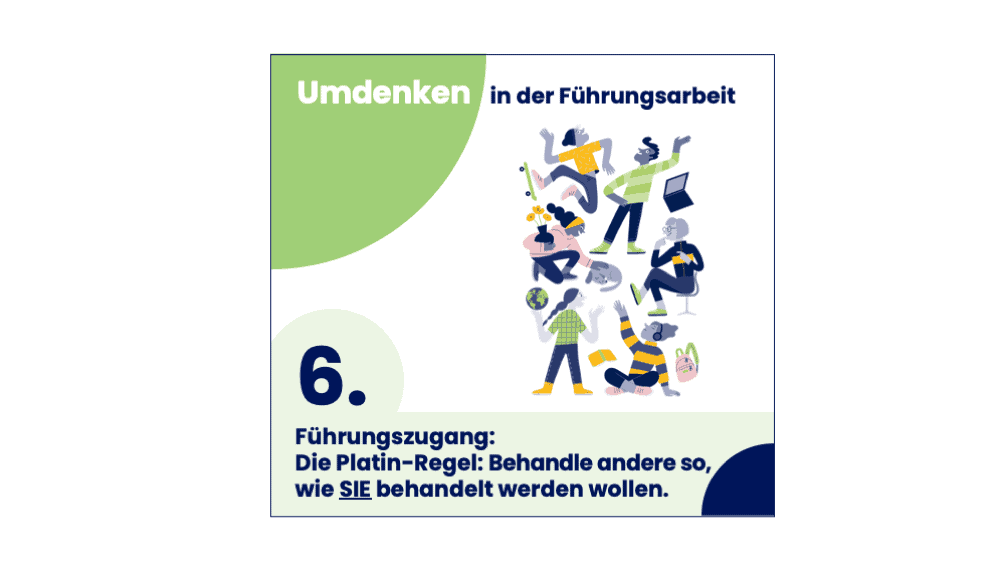
Treat others the way YOU want to be treated.
Regardless of how one defines leadership, one of the most fundamental tasks of a leader is to influence people in such a way that they are motivated to work toward a common goal. Influence comes in many forms, both positive and negative. The most influential opinion leaders in all professions and industries know that what matters most is understanding the target audience—also known as WIIFM (What’s in it for me?).
If you were to ask executives at your company, how do you think they would answer the following questions?
Have you ever …
- Have you learned a bit about the different personality types, but would like to know how to motivate them?
- Have you noticed that different people are inspired by different things?
- Have you ever praised an employee or expressed your appreciation, only to find that they didn't appreciate it or didn't react the way you expected?
- Have you had trouble maintaining your own energy and motivation?
- Have you noticed that some people find it easy to follow you, while others don't?
- Have you had trouble creating incentives that truly motivate your employees to perform better?
It starts with the fact that, as children, we’re often confronted with statements like this: “How would you feel if someone treated you that way?” With the best of intentions, we appeal to our compassion—often paired with the Golden Rule, “Treat others as you would like to be treated”—in order to encourage a different behavior.
Many leaders also follow this rule in their professional lives. Along the way, they have internalized the following philosophy of motivation: Use your own perspective and experience as a guide when trying to motivate others. What’s good for you is also good for others.
With this philosophy, leaders are, at best, able to positively influence people who are just like themselves. It’s more likely, however, that they’ll fall into the “one-size-fits-all” trap and assume that everyone is as motivated as they are. This can lead them to …
- surround themselves with people who are just like them.
- Creating incentive systems that work well for some but are demotivating for others.
- experience a lack of innovation within their teams.
- promote and establish (unintentionally) discriminatory hiring and promotion practices.
Does your company face any of these problems? Are your managers able to tailor motivation strategies to individual needs, or are they caught in the trap of projecting their own motivational needs onto others?
A shift in your leaders’ mindset regarding influence and motivation can make all the difference. Here is the sixth of eight mindsets that can transform a leader’s effectiveness.
A New Approach to Leadership – Leadership Insights #6: Treat others the way they want to be treated.
The Golden Rule of leadership—namely, treating others the way you would like to be treated—means that we should tailor the way we treat others to their motivational needs, rather than our own.
Different People, Different Customs
The Process Communication Model (PCM) describes six different personality types that we all possess, arranged in a preferred, fixed order. Each type within us has unique motivational needs that must be met in order to “function” effectively. For each person, one of these six types—known as a “phase”—is the primary source of motivation. A personalized PCM profile can identify our respective phase types.
This isn't about selfish desires, but about innate needs that must be met in order to succeed in life. Taking into account each person's unique motivational needs gives leaders significantly more opportunities to positively influence others, as well as strategies for their own self-care.

Recognition as a Person and Sensory Stimulation
Acceptance of oneself means knowing that you are valued unconditionally for who you are, and not for what you do. When sensory stimulation serves as a motivator, the goal is to surround yourself with things that feel good, smell good, sound good, taste good, and look good.
Motivate people with this need by showing them that you care about them as individuals and by creating a safe, supportive, and friendly environment.

Being Alone
You need unstructured, undisturbed time to yourself. Whether you're in a crowd or in a park, you can retreat to a quiet spot to recharge.
Motivate people with this need by giving them the space and time to be alone and relax.
Recognition of Productive Work, Time Management
You thrive on productivity and efficiency. Planning and completing tasks are very rewarding activities for you. Structured time means that you value time and its planned use.
Motivate people with this need by drawing on their logical thinking and problem-solving skills. Even better: Help them use their time efficiently and productively.

Recognition for one's achievements (commitment) and for one's convictions
You want to know that the work you do is meaningful. Your work reflects your values, and you’re motivated when you can demonstrate that you’ve helped advance something important. When it comes to recognition for your convictions, it’s about having your core beliefs and values respected and valued.
Motivate people with this need by clearly demonstrating the connection between their values, their contributions, and the value they bring to the company.
(playful) contact
You love coming into contact with new and stimulating things and people to spark your creativity. Movement, play, and unexpected interactions stimulate your brain and give you energy.
Motivate people with this need by making sure there's laughter and that things are fun.

Excitement
You need a lot of events to happen in a short period of time. You feel comfortable when something unexpected happens or when you have to face a challenge.
Motivate people with this need by offering them a challenge or an exciting opportunity to do something that helps the team or the company succeed.
Which of these traits best describes you? What about the people you lead? What type of motivation is the hardest for you to recognize, and requires the most effort to incorporate into your leadership toolkit? In most cases, 80% of our leadership problems revolve around 20% of our employees.
Apply the Platinum Rule and see how productivity and engagement increase
Imagine the possibilities that arise when you tailor your motivation strategies to the stage-specific needs of each individual. How would that affect performance, talent development, or compliance? How would it impact the success of marketing, sales, and customer service?
Change your mindset to unleash even more leadership potential
One of the modules in the PCM leadership program focuses on how to positively influence and motivate different personality types.
In this sixth module, managers learn how to …
- can improve their own energy and motivation.
- can help their employees feel more valued, motivated, and energetic.
- can increase their positive influence and credibility as leaders.
- can increase employees' commitment, motivation, performance, loyalty, and sense of connection to their jobs.
Get in touch with our PCM and leadership experts to learn more about how PCM can help your leaders effectively shape and further optimize the critical intersection between communication and personality.
Why can PCM leadership seminars make a difference for you?
Social competence is arguably the most important trait of a good leader: the ability to build relationships, engage with others, resolve conflicts, and motivate people are essential leadership qualities. Today’s leaders must cultivate their self-confidence and communication skills in order to succeed in an extremely diverse, global, and virtual environment.
The PCM Leadership Seminar Program is a collection of learning and practical modules that use the Process Communication Model® to address the most common and important questions in day-to-day leadership.
Managers will gain a better understanding of how their own personality influences their role and effectiveness as leaders. They will learn how to tailor communication and motivation strategies so that all personality types in the workplace are motivated to contribute. They will also learn how to strategically leverage personality diversity to the fullest extent possible.
Middle managers and those new to their roles will learn and apply key interpersonal and communication skills to enhance their effectiveness in addressing a variety of leadership challenges, such as communicating more effectively, managing performance and motivation, handling miscommunication and conflict, building trust and engagement, and practicing self-care.
Copyright Notice:
Originally published on April 5, 2023, by Nate Regier, next-element.com – translated and adapted by Uwe Reiner-Kolouch, KCG