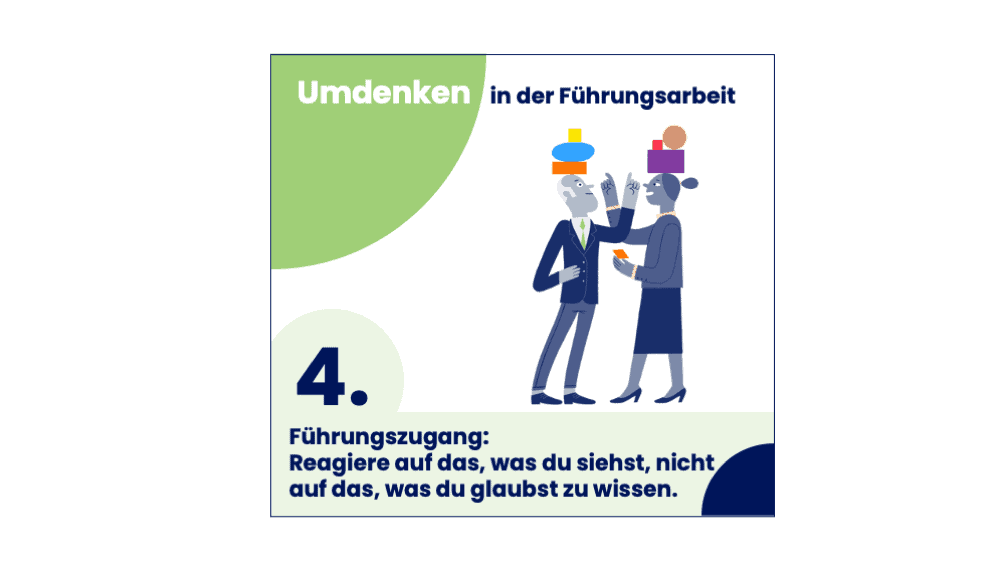
React to what you see, not to what you think you know.
Leadership based on assumptions often leads to negative outcomes and experiences. Not only does it lead to bias and defensiveness, but it also blinds leaders to the actual behaviors that are literally taking place right before their eyes.
If you were to ask executives at your company, how do you think they would answer the following questions?
Have you ever …
- Have you ever felt like you weren't on the same wavelength when communicating with someone?
- Have you had trouble building relationships when managing employees?
- Have you ever found conversations with certain people to be energizing, but felt drained after talking with others?
- Do you want to get to know someone better so you can communicate with him or her more effectively?
- Have you ever made an assumption about someone that turned out to be wrong?
People want to be seen and heard for who they are, not based on assumptions or generalizations. How well do your leaders interpret others’ behavior? Do they communicate with everyone the same way, or can they adapt to the person they’re talking to? Can they anticipate, by observing behavior, what communication style different people need?
A slightly different approach to communication on the part of leaders can make a decisive difference here. This is the fourth of eight leadership mindsets that can significantly improve a leader’s effectiveness.

A Shift in Leadership Thinking – Leadership Approach #4: Respond to what you see, not to what you think you know.
The Process Communication Model® identifies differences in the way people communicate. These differences are evident in words, tone of voice, body posture, gestures, and facial expressions. By recognizing these behavioral cues, leaders can establish a better connection with the people they’re interacting with and avoid an approach that treats everyone the same—and thus lumps everyone together. The result: People feel “unheard,” “misunderstood,” or “not understood.” Furthermore, we can tell from a person’s reaction whether we are truly communicating with one another and on the same wavelength or not.
Four Channels of Communication: How to Know If You're on the Same Page
Effective communication is a two-way street. When you are “in sync” or “on the same wavelength” with another person, it means that they receive your message as intended and respond in a way that lets you know they understand what you mean. How many of your daily interactions meet this criterion? What would be different if you could increase that number?
Just as a radio or television must be tuned to the right channel to receive our favorite program, people must also be on the same channel to communicate with one another. Everyone has a preferred communication channel for connecting with others and building relationships.
Supportive Communication Channel:
Some people communicate most effectively when we make them feel comfortable and show them that we value them and care about them personally.
Communication channel for inquiries:
Some people respond best when we ask them for information by inviting them to think about it and respond with facts or opinions—much like two computers exchanging data with each other.
A playful channel of communication:
Others, on the other hand, appreciate it when we’re spontaneous and humorous in our communication and keep the conversation light, lively, energetic, and fun—in short: when we simply have fun together and laugh.
Directive communication channel:
Still others communicate best when we ask them clearly and directly to do something or reflect on something, using only a few words and telling them exactly what we want from them without asking.

Respond to the behavior you observe to improve interpersonal communication
Imagine the possibilities that open up when you use the PCM tools for communication channels in a targeted way to improve your interpersonal communication: daily interactions, emails, texts—even difficult conversations—will unfold differently. Imagine how relationships, engagement, and the effectiveness of communication would improve if you perfectly tailored your communication channel to each specific conversation partner. These are the benefits:
- The focus is on behavior, not on (unspoken) assumptions or even prejudices.
- Avoiding embarrassing mistakes and reducing defensiveness in communication.
- A clear understanding that we ourselves are responsible for how we communicate with one another.
- Help in clearly distinguishing between healthy communication and unhealthy miscommunication.
Change your mindset to unleash even more leadership potential
In one of the eight modules of our PCM Leadership Seminar Program, you will learn how to recognize communication styles associated with the different types found in each of our personality architectures based on easily observable behaviors, and how to avoid being guided by assumptions and prejudices.
In this module, managers will learn how to …
- become (more) aware of their own communication styles and language patterns.
- be better able to recognize other communication styles.
- can improve the quality and impact of their emails, social media posts, and other digital communications.
- You can avoid wasting energy on conversations riddled with miscommunication.
- can help others feel heard, understood, and included.
Get in touch with our PCM and leadership experts to learn more about how PCM can help your leaders effectively shape and further optimize the critical intersection between communication and personality.
Why can PCM leadership seminars make a difference for you?
Social competence is arguably the most important trait of a good leader: the ability to build relationships, engage with others, resolve conflicts, and motivate people are essential leadership qualities. Today’s leaders must cultivate their self-confidence and communication skills in order to succeed in an extremely diverse, global, and virtual environment.
The PCM Leadership Seminar Program is a collection of learning and practical modules that use the Process Communication Model® to address the most common and important questions in day-to-day leadership.
Managers will gain a better understanding of how their own personality influences their role and effectiveness as leaders. They will learn how to tailor communication and motivation strategies so that all personality types in the workplace are motivated to contribute. They will also learn how to strategically leverage personality diversity to the fullest extent possible.
Middle managers and those new to their roles will learn and apply key interpersonal and communication skills to enhance their effectiveness in addressing a variety of leadership challenges, such as communicating more effectively, managing performance and motivation, handling miscommunication and conflict, building trust and engagement, and practicing self-care.
Copyright Notice:
Originally published on March 1, 2023, by Nate Regier, next-element.com – translated and adapted by Uwe Reiner-Kolouch, KCG