Goodbye to stereotypical thinking!
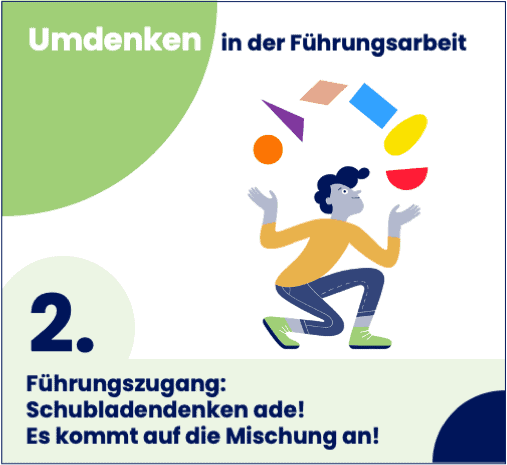
Personality is always a mix of “types WITHIN a person” and not merely a “type OF person.”
When we talk about personality, we’re not talking about personality types or animal names, quadrants, factors, colors, heroes, or which planet you come from. Personality is a dimension of neurodiversity. It’s about individual differences in how we process our personal perceptions, as well as individual behavior when communicating with others.
Let's try a little thought experiment: Think of some leaders in your circle and consider how they might answer the following questions.
Have you ever …
- Have you ever taken a personality test and then felt like the results somehow pigeonholed you?
- After attending a training session on the topic of “human personality,” have you ever felt that you were being categorized or stereotyped?
- Have you ever seen people hide behind their personality assessments?
- Have you ever felt that you don't really trust certain people, without being able to pinpoint a specific reason?
- Have you ever had the experience of someone not trusting you?
- Have you ever heard of someone who claims to value all personality types equally, but then fails to adapt their communication or leadership style to different people?
When talking about personality, it’s common to refer to “types” of people and use phrases like “I’m a _________” or “My boss is a _________.” This kind of labeling isn’t supported by psychology because it doesn’t reflect how personality actually works. Rather, it oversimplifies the complexity of human behavior, fosters bias, reduces inclusivity, and limits personal responsibility for one’s behavior.
How do you currently use personality assessments? Are employees encouraged, trained, and held accountable to change their own behavior in order to communicate with different personality types? Or do they hide behind personality types and use their own personality assessments to justify their behavior and excuse themselves by saying, “That’s just the way I am, so I can’t behave any differently”?
A change in attitude toward dealing with personality can make a decisive difference. Here is the second of eight leadership approaches (“mindsets”) that can significantly improve a leader’s effectiveness.

A Shift in Leadership Thinking – Leadership Approach #2: Say Goodbye to Stereotypes!
Personality is always about the mix of “types WITHIN us” and not merely about being a “type OF person.”
Unlike many other personality models, this is a fundamental principle of the Process Communication Model®. The PCM is a behavior-oriented personality model with the following distinct characteristics:
- PCM measures the relative strength of six personality types that we all possess. PCM doesn't rely on boxes, stereotypical thinking, or overly simplified categorizations.
- PCM shows how each personality type perceives and processes the world around them, how they prefer to communicate, what motivates them, and how they sabotage themselves through negative behavior when under distress.
- The best part is that PCM provides very specific guidance on communication in leadership, designed to encourage each personality type within us to make the most of its unique strengths and abilities.
Six Personality Types Within Us, Six Ways to Shine
Here you'll find an overview of the six personality types that we all possess to varying degrees. You'll see their characteristic strengths and the situations in which you can put those strengths to good use.
Empath – compassionate, sensitive, warm-hearted
These strengths are particularly helpful in situations that require the following behaviors:
- personal relationships
- caring emotional support
- Empathy & Compassion
- Sensitivity to other people's feelings
- a warm, welcoming environment
Logician – responsible, logical, organized
These strengths are particularly helpful in situations that require the following behaviors:
- Summarizing Information
- logical thinking
- Strategic Planning
- Prioritizing Tasks
- Improving Efficiency
- Adhering to specific schedules
Rebel – spontaneous, creative, playful
These strengths are particularly helpful in situations that require the following behaviors:
- Spontaneity and Flexibility
- Openness to new ideas
- Creativity and a Love of New Things
- A playful approach and a fun experience

Dreamer – imaginative, thoughtful, calm
These strengths are particularly helpful in situations that require the following behaviors:
- a calm, thoughtful approach
- Time to Think About the Possibilities
- Introspection
- Calm and Patience
Perseverer – dedicated, attentive, conscientious
These strengths are particularly helpful in situations that require the following behaviors:
- Adherence to Values and Principles
- Committing to a Mission
- Developing a Vision for the Future
- Standing up for what you believe in
Doer – adaptable, persuasive, charming
These strengths are particularly helpful in situations that require the following behaviors:
- decisive action
- Ability to adapt at the right moment
- Performing well with little to no preparation
- build a relationship quickly
- Exercising Persuasiveness and Influence

The Responsibility of Leadership: Creating Opportunities for All of Our Personal Resources to Flourish
Leaders are responsible for delivering results within their organizations. This means they must lead diverse teams of people to achieve their goals. Leaders are also held accountable for creating an environment where every individual feels heard, valued, included, and motivated. PCM helps leaders achieve this.
If people are an organization’s greatest asset, then their personalities are arguably the most valuable resources available to leaders for advancing the organization. Leaders are thus the architects of opportunities for the full development of their own personalities and those of others. This means that they are responsible for,
- to recognize and appreciate all six types within oneself.
- to recognize and appreciate all six types in others.
- to confront their own prejudices, disparaging attitudes, and acts of discrimination related to their personality.
- To design policies and practices in their leadership work in a way that sustainably supports the integration of different personality types.
- to learn effective communication and leadership strategies that bring out the best in all combinations of personality types.
Change your mindset to unleash even more leadership potential
In one of the eight modules of our PCM Leadership Seminar Program, you’ll learn how to recognize, value, engage, and make the most of all six personality types in the workplace. In this module, leaders learn how to …
- expand their teams' capabilities and make better use of them for everyone involved.
- Prevent burnout and increase employee retention.
- create a more inclusive and diverse workplace for all combinations of personality types.
Get in touch with our PCM and leadership experts to learn more about how PCM can help your leaders effectively shape and further optimize the critical intersection between communication and personality.
Why can PCM leadership seminars make a difference for you?
Social competence is arguably the most important trait of a good leader: the ability to build relationships, engage with others, resolve conflicts, and motivate people are essential leadership qualities. Today’s leaders must cultivate their self-confidence and communication skills in order to succeed in an extremely diverse, global, and virtual environment.
The PCM Leadership Seminar Program is a collection of learning and practical modules that use the Process Communication Model® to address the most common and important questions in day-to-day leadership.
Managers will gain a better understanding of how their own personality influences their role and effectiveness as leaders. They will learn how to tailor communication and motivation strategies so that all personality types in the workplace are motivated to contribute. They will also learn how to strategically leverage personality diversity to the fullest extent possible.
Middle managers and those new to their roles will learn and apply key interpersonal and communication skills to enhance their effectiveness in addressing a variety of leadership challenges, such as communicating more effectively, managing performance and motivation, handling miscommunication and conflict, building trust and engagement, and practicing self-care.
Our leadership and PCM experts can help you identify your leadership development needs and design the program that’s exactly right for your goals. Find a PCM expert near you here.
Copyright Notice:
Originally published on February 22, 2023, by Nate Regier, nextelement.com – translated and adapted by Uwe Reiner-Kolouch, KCG