
GemaSim is a computer simulation in which groups of four trainees pilot a spaceship and carry out challenging missions in space. However, the learning process does not center on technical skills. The focus is entirely on the goal-oriented behaviors of the command staff and the team members within those staffs. It was a great pleasure for me to demonstrate the training opportunities that GemaSim has to offer to the SBB representatives during a three-day course. These were further enhanced for Daniel Schlup’s team with an additional enabler. This is because the entire crew had been trained in PCM (Process Communication Model) and was thus well-equipped to maintain effective communication even under intense stress. The combination of these two training approaches—PCM and GemaSim—transformed his crew’s training into a true power-training experience.
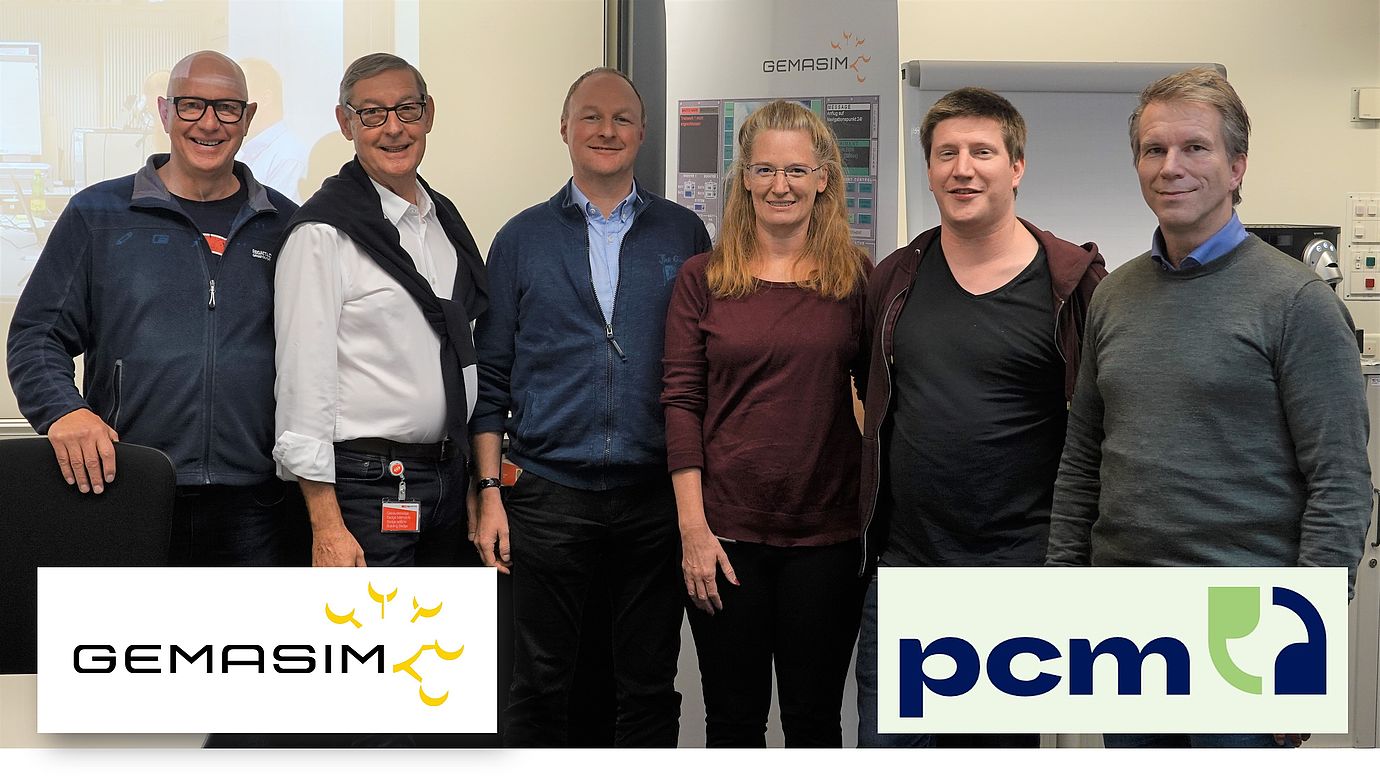 Martin Wyler (second from the left) and the TTeam led by Daniel Schlup (1st from left)
Training concepts for emergency and crisis management organizations present a particular challenge. In the wake of the financial crisis—and certainly by the time of the pandemic—many companies had to grapple with the question of what constitutes the best approach to leadership and collaboration in such extraordinary situations. It is therefore not surprising that SBB began looking to the aviation industry for inspiration. Leadership concepts, as well as aspects of collaboration under difficult conditions, have been consistently refined in the aviation industry since the 1980s. The cockpit serves as both a focal point and a metaphor in this context. Much of what has proven effective in this confined leadership environment can indeed be applied to the staff work of emergency and crisis management organizations. When it comes to the challenging organizational and personnel-intensive elements of leadership support in large companies, aviation can only offer symbolic guidance. Bridges, however, can be built without compromising on interpersonal skills, the inner attitude and mindset of supervisors, or the rigorous application of the principles of a structured approach.
As the former head of crisis management at Swissair and as a captain, I came across GemaSim while developing training concepts for crisis and emergency response organizations. For many years, the tool has proven its worth in emergency response organizations. It spares trainees from inefficient lecture-style instruction. The simulation, which fully engages them from the very first second, gives them the opportunity to learn from real-life experiences. It’s a proven, successful learning approach that not only leaves a lasting impression but is also fun.
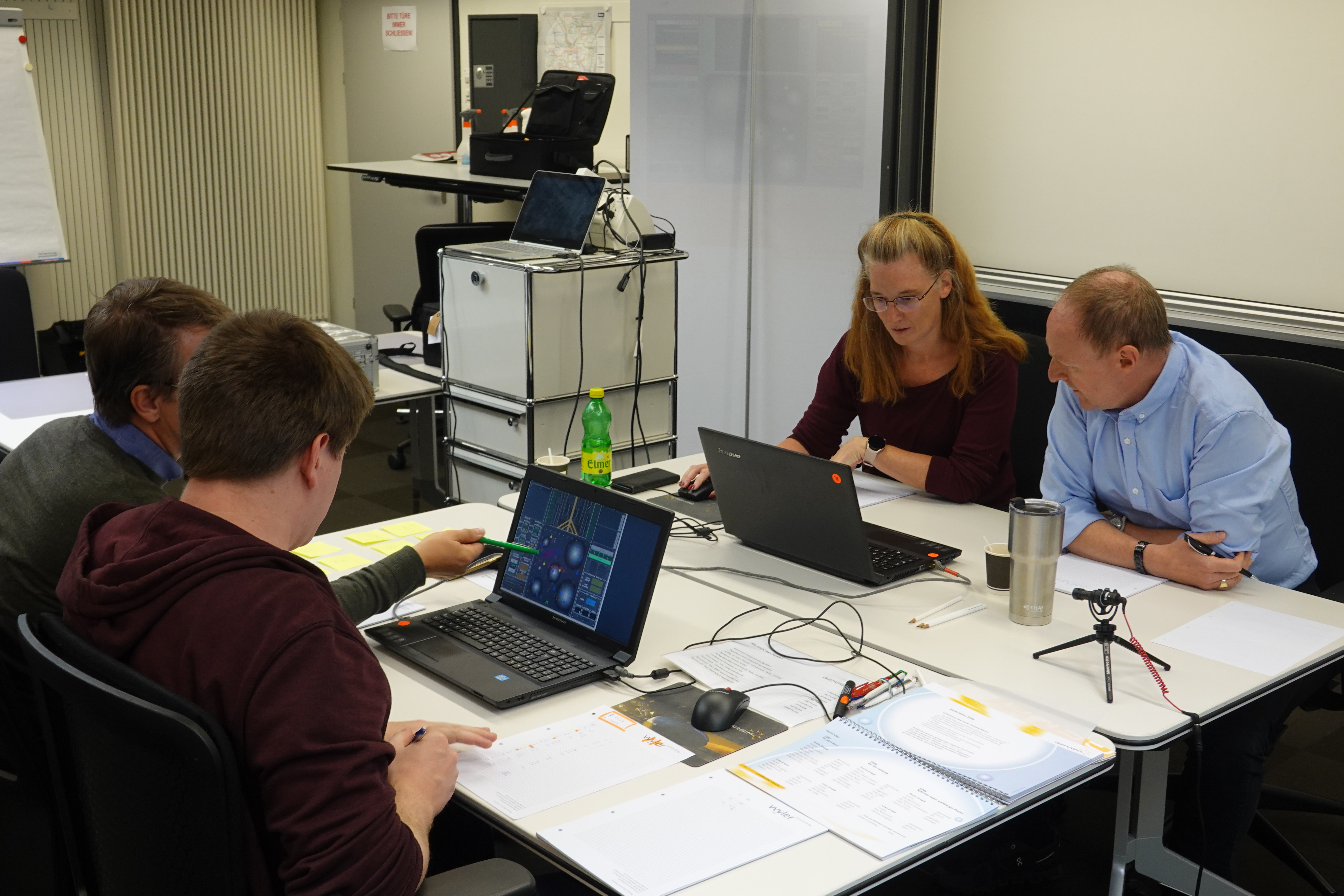 A BA Look at GemaSim Training
It was no coincidence that Daniel Schlup’s team had completed the PCM (Process Communication Model) basic training before the GemaSim training session. Effective communication within the staff teams is too important to him for him to have overlooked it. PCM not only reveals a person’s individual strengths in a personality profile but also uncovers their predictable dysfunctional behavior under stress. This training in communication, reflection, and self-management is an incredible enabler for members of crisis response organizations.
As a certified PCM trainer, I was able to support each and every trainee in an individualized and personal way. This is because the challenges of leadership and collaboration during an emergency or crisis manifest themselves completely differently for each person. To ensure that everyone involved can be a valuable resource—even amid the stress of a crisis—it is essential not only to address them individually but also to place them in the right roles based on their character strengths. Training that treats everyone the same and relies solely on simplistic generalizations is reminiscent of a time when the village teacher was still seen as an authority figure.
For more details on the use of Gemasim in combination with PCM, please contact Martin Wyler directly.