The Role of Personality in Visual Perception: Insights and Applications
In a world that is increasingly visually oriented, the way we process information plays a crucial role in our daily lives. A fascinating study titled “Seeing the Forest or the Tree Depends on Personality: Evidence from the Process Communication Model during a Global/Local Visual Search Task” sheds new light on the influence of personality on our visual perception. This article highlights three key takeaways from this study and their implications for education and the workplace.
Key Point 1: Personality types determine the nature of visual processing
The study highlights that our personality has a significant influence on how we process visual stimuli. While some people tend to focus on the big picture, others concentrate on the details. This insight is particularly relevant in educational settings, where adapting teaching methods to different learning styles can be highly beneficial.
Key Point 2: Different Processing Patterns Among Various Personality Types
Interestingly, certain PCM personality types, such as “Rebels” and “Dreamers,” exhibit distinct patterns in how they process visual information. While Basic Rebels tend to be more easily distracted, Basic Dreamers show a preference for global patterns. These insights can help in designing work environments that take into account and foster each individual’s strengths.
Key Point 3: Applying the Findings in Practice
The study offers valuable insights for practical application. By understanding how different personality types process information, we can optimize both learning and work environments. This leads to more effective communication, improved learning, and increased productivity. The PCM experts support you in this process with coaching, seminars, and training programs.
Key Statistical Data from the Study
This peer-reviewed study, “Seeing the Forest or the Tree Depends on Personality: Evidence from the Process Communication Model during a Global/Local Visual Search Task,” by Sixtine Lefebvre and Virginie Beaucousin, provides detailed statistical data:
1. Participants: 77 healthy volunteers (42 women, mean age 40.75 years ± 8.39 years) participated in the study. All had normal or corrected vision and no neurological or neuropsychiatric disorders.
2. Experimental Procedure: Participants completed the standardized Process Communication Model (PCM) questionnaire and performed various tasks, including a global/local visual task, a working memory task, the Victoria Stroop Test, and the Raven Progressive Matrices Test.
3. Results: Of all participants, 16 were identified as “Logicians” (Base), 7 as “Perseverers” (Base), 21 as “Empaths” (Base), 15 as “Rebels” (Base), 8 as “Dreamers” (Base), and 10 as “Doers” (Base). The results showed that people with the Logician, Perseverer, Empath, and Doer base types exhibited a classic global dominance pattern, while those with the Dreamer and Rebel base types showed divergent patterns.
4. Statistical Analysis: Reaction times (RTs) were analyzed using a three-factor analysis of variance (ANOVA) that accounted for group affiliation, the occurrence of targets (global, intermediate, local), and the number of distractors. The ANOVA revealed main effects for the level of target occurrence and the number of distractors.
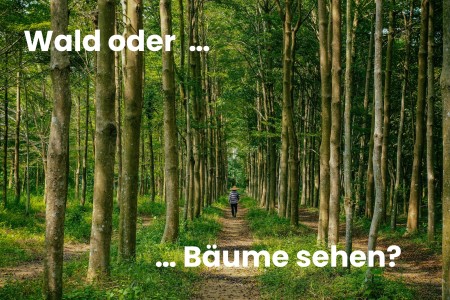
5. Conclusions: The study shows that each person perceives global (forest) and local (tree) information differently. This has important implications for understanding visual perception and how it is influenced by personality traits.
Conclusion
The study “Seeing the Forest or the Tree Depends on Personality” offers profound insights into the complex interaction between personality and visual perception. Applying these findings has the potential to revolutionize educational and workplace strategies by tailoring them to each individual’s strengths and preferences. By recognizing and leveraging the role of personality in visual perception, we can pave the way for more effective communication and productivity.